Thermoplastics

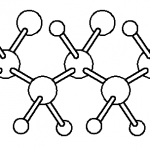
Thermoplastics are a class of polymers that soften when heated and harden upon cooling, without undergoing significant chemical change. This behavior is primarily associated with linear or lightly branched molecular structures in which polymer chains are held together by secondary intermolecular forces rather than extensive covalent crosslinking. When heat is applied, these intermolecular forces are reduced, allowing the chains to move past one another and the material to be reshaped. Upon cooling, the forces are re-established, and the material returns to a rigid or semi-rigid state. This reversible thermal behavior distinguishes thermoplastics from thermosetting polymers, which form permanent crosslinked networks during curing and cannot be remelted.
User comments

From a materials engineering perspective, thermoplastics are characterized by their glass transition temperature (Tg) and, for semi-crystalline polymers, their melting temperature (Tm). Below Tg, amorphous thermoplastics behave as rigid, glass-like solids; above Tg, they exhibit increased ductility and toughness. Semi-crystalline thermoplastics contain both amorphous and ordered crystalline regions, leading to distinct melting behavior and often higher strength and chemical resistance. The balance between amorphous and crystalline structure, along with molecular weight and chain architecture, strongly influences mechanical properties, processing temperatures, and dimensional stability.

Thermoplastics are widely used in manufacturing because they can be repeatedly heated, formed, and cooled using processes such as injection molding, extrusion, thermoforming, and blow molding. Common examples include polyethylene (PE), polypropylene (PP), polyvinyl chloride (PVC), polystyrene (PS), and polyethylene terephthalate (PET). Their reprocessability, relatively low processing temperatures compared to metals, and compatibility with high-volume production methods make thermoplastics essential materials in modern engineering technology applications, ranging from packaging and consumer products to automotive components and electrical insulation.

Polyethylene (PE)

Polyethylene (PE)
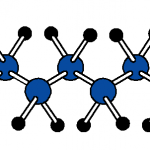
Polyethylene (PE) is a thermoplastic polymer composed of repeating ethylene (C₂H₄) units and is one of the most widely produced plastics in the world. Its molecular structure consists of long hydrocarbon chains with varying degrees of branching, which strongly influence density, crystallinity, and mechanical properties. Low-density polyethylene (LDPE) contains significant chain branching and exhibits lower...

Polyethylene Terephthalate (PET)

Polyethylene Terephthalate (PET)
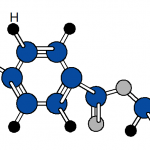
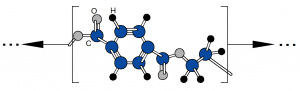
Polyethylene terephthalate (PET) is a thermoplastic polyester formed by the condensation polymerization of ethylene glycol and terephthalic acid. Its repeating unit contains an aromatic ring linked by ester functional groups, resulting in a linear polymer chain with relatively high stiffness compared to many polyolefins. The presence of the benzene ring in the backbone restricts chain...

Polypropylene (PP)

Polypropylene (PP)
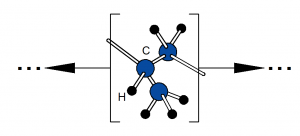
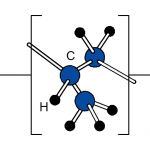
Polypropylene (PP) is a thermoplastic polymer derived from propylene monomers and characterized by a hydrocarbon backbone with a methyl (–CH₃) side group on alternating carbon atoms. This side group limits chain mobility compared to polyethylene, resulting in a material with greater stiffness, higher softening temperature, and improved resistance to deformation under moderate heat. Polypropylene is...

Polystyrene (PS)

Polystyrene (PS)
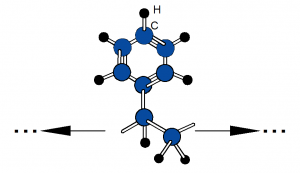
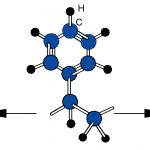
Polystyrene (PS) is a thermoplastic polymer formed from styrene monomers, which contain an aromatic phenyl ring attached to a vinyl group. In the polymer, these phenyl rings become pendant side groups along the hydrocarbon backbone. The bulky aromatic side groups restrict chain movement, resulting in a material that is relatively rigid and dimensionally stable at...

Polyvinyl Chloride (PVC)

Polyvinyl Chloride (PVC)
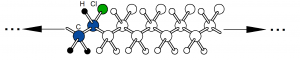
Polyvinyl chloride (PVC) is a thermoplastic polymer produced from vinyl chloride monomers and characterized by the presence of chlorine atoms attached to the carbon backbone. The chlorine content increases intermolecular attraction between polymer chains, resulting in a material that is inherently more rigid and less flexible than many hydrocarbon-based thermoplastics such as polyethylene and polypropylene....

Polyamide (PA)

Polyamide (PA)
Polyamide (PA), commonly known as nylon, is a family of thermoplastic polymers characterized by repeating amide (–CONH–) linkages along the molecular backbone. These polar amide groups promote strong intermolecular hydrogen bonding, which contributes to relatively high strength, toughness, and wear resistance compared to many commodity plastics. As a result, polyamides occupy an important position between...

Acrylonitrile butadiene styrene (ABS)

Acrylonitrile butadiene styrene (ABS) is a thermoplastic polymer formed from three monomers: acrylonitrile, butadiene, and styrene. The material combines the rigidity and surface finish associated with styrene, the toughness and impact resistance contributed by the rubbery butadiene phase, and the chemical and thermal resistance provided by acrylonitrile. This multiphase structure results in a material that...
Polyethylene (PE)

Polyethylene (PE)

Polyethylene (PE) is a thermoplastic polymer composed of repeating ethylene (C₂H₄) units and is one...
Polyethylene Terephthalate (PET)

Polyethylene Terephthalate (PET)

Polyethylene terephthalate (PET) is a thermoplastic polyester formed by the condensation polymerization...
Polypropylene (PP)

Polypropylene (PP)

Polypropylene (PP) is a thermoplastic polymer derived from propylene monomers and characterized by a...
Polystyrene (PS)

Polystyrene (PS)

Polystyrene (PS) is a thermoplastic polymer formed from styrene monomers, which contain an aromatic...
Polyvinyl Chloride (PVC)

Polyvinyl Chloride (PVC)

Polyvinyl chloride (PVC) is a thermoplastic polymer produced from vinyl chloride monomers and characterized...
Polyamide (PA)

Polyamide (PA)

Polyamide (PA), commonly known as nylon, is a family of thermoplastic polymers characterized by repeating...

Acrylonitrile butadiene styrene (ABS)

Acrylonitrile butadiene styrene (ABS) is a thermoplastic polymer formed from three monomers: acrylonitrile,...