
Screw machines are specialized lathes designed to manufacture parts from bar stock through a fixed sequence of operations. Unlike engine lathes, where an operator manually controls tool motion, screw machines automate tool movement using a system of cams, linkages, and mechanical timing mechanisms. Once set up, the machine repeatedly performs the same cycle with minimal human intervention.
At the heart of the screw machine is the cam. Each cam is carefully shaped to convert rotary motion into a specific linear or angular movement. Different cams control different functions: tool feed, cross-slide motion, turret indexing, cutoff operations, and bar advancement. Together, these cams form a tightly choreographed mechanical program. Changing the part does not involve changing dimensions at the machine—it involves changing the cams themselves.
From an engineering standpoint, screw machines represent one of the earliest examples of fully automated machining cycles. The machine does not respond to geometry in the way a tracer does. Instead, it executes a predetermined sequence of actions, each timed precisely relative to the others. This distinction is important. Tracer machines encode shape in a pattern; screw machines encode process in motion profiles and timing.
Single-spindle screw machines were commonly used for simpler parts, while multi-spindle machines dramatically increased productivity by machining several parts simultaneously at different stations. As each spindle indexed, the part progressed through successive operations until it was completed and cut off. The result was extraordinary throughput, especially for fasteners, fittings, bushings, and other small components used in vast quantities.
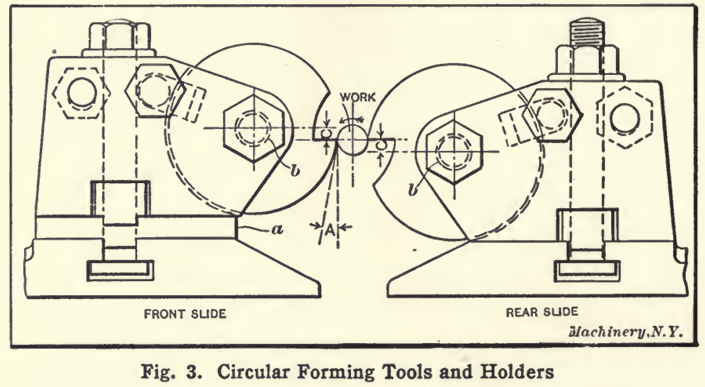
The advantages of screw machines were clear: once set up, they delivered unmatched production rates and excellent consistency. However, these advantages came with trade-offs. Setup was labor-intensive and required deep mechanical expertise. Designing and machining custom cams was itself a skilled process, and even small design changes could require substantial rework. As a result, screw machines excelled in long production runs but were poorly suited to frequent changeovers.
Despite these limitations, screw machines played a crucial role in shaping industrial thinking. They demonstrated that complex manufacturing tasks could be decomposed into repeatable, automated sequences. They also reinforced the idea that setup time and process planning were as critical to productivity as cutting speed or horsepower. In many ways, the screw machine shop was an early lesson in what would later be called manufacturing engineering.
In the broader history of automation, screw machines highlight an important contrast with tracer technology. Tracers focused on copying geometry, while screw machines focused on executing sequences. Numerical control would eventually unify these ideas by allowing both geometry and process to be defined abstractly using numbers rather than metal cams or physical patterns.
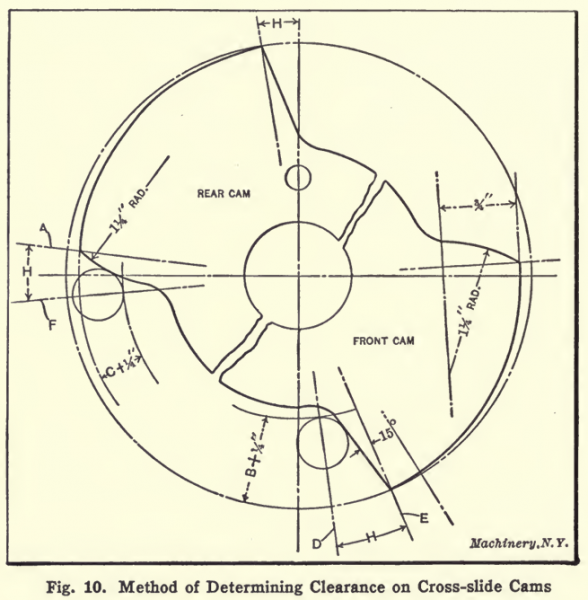
When numerical control began to emerge in the mid-twentieth century, it did not replace an unsophisticated manufacturing landscape. It replaced one populated by highly refined mechanical systems that were already attempting to formalize skill, timing, and repetition. Screw machines represent the high-water mark of this mechanical approach—remarkably capable, but ultimately constrained by the physical nature of their control systems.
Understanding screw machines provides essential context for appreciating why programmable control was such a powerful step forward. CNC did not eliminate automation; it replaced metal programs with digital ones.
References
Automatic Screw Machines; a treatise on the construction, design, and operation of automatic screw machines and their tool equipment (circa 1920) — this is public domain because it was published before 1923.