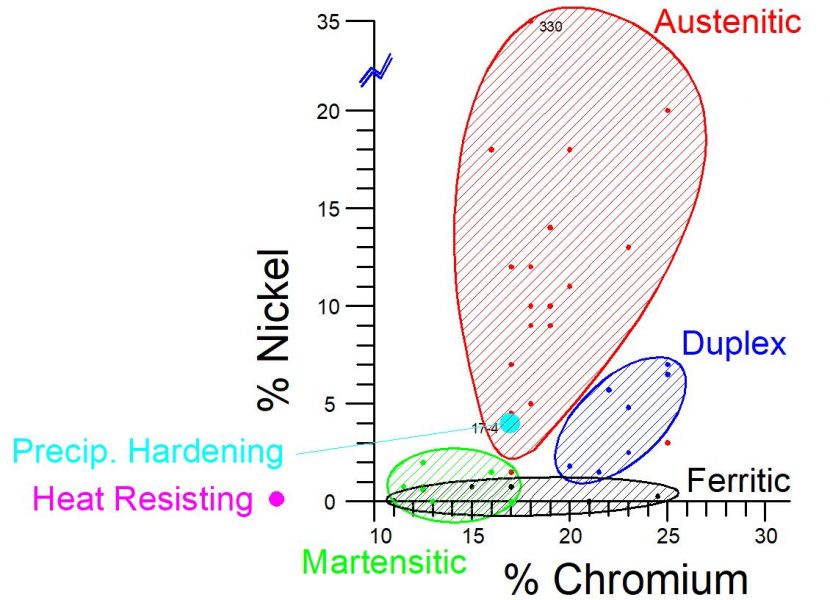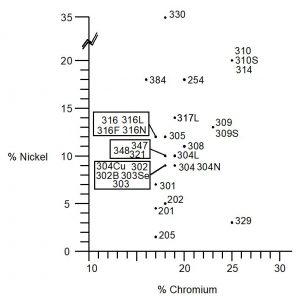
This group is the most common type of stainless steel and contains high levels of chromium (usually 17% or more) and a significant nickel content. Austenitic stainless steels are non-magnetic and have excellent corrosion resistance. They are highly formable and weldable, making them suitable for a wide range of applications, including kitchen appliances, food processing...
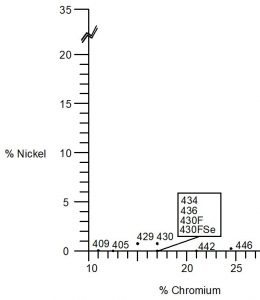
Ferritic stainless steels have little to no nickel. They are magnetic and offer good corrosion resistance, especially in mildly corrosive environments. These steels are often used in automotive exhaust systems, architectural trim, and appliances.
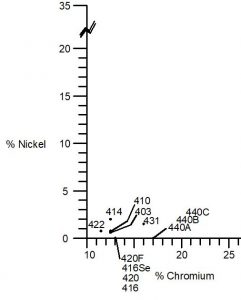
Martensitic stainless steels have a moderate chromium content (usually 12-18%) and low nickel. They are heat-treatable and can achieve high hardness and strength. Martensitic stainless steels are used in applications where hardness and wear resistance are essential, such as cutlery, surgical instruments, and steam turbine blades.
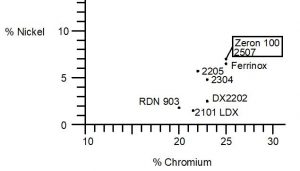
Duplex stainless steels combine the properties of both austenitic and ferritic stainless steels. They have a balanced composition of chromium, nickel, and molybdenum, providing excellent corrosion resistance and high strength. Duplex stainless steels are commonly used in chemical processing, oil and gas exploration, and marine applications.
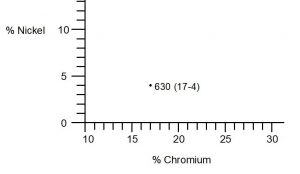
Precipitation-hardening stainless steels contain chromium, nickel, and other alloying elements such as copper. They can be heat-treated to achieve high strength while maintaining good corrosion resistance. These steels find applications in aerospace components, petrochemical equipment, and high-performance sports equipment. Examples include: 17-4 PH (UNS 17400) 17-7 PH (UNS 17700) 15-5 PH (UNS 15500) 13-8 PH...
Stainless steels are widely selected because of their corrosion resistance, durability, and generally good mechanical performance. However, the term “stainless” can be misleading if interpreted to mean that these alloys are immune to corrosion or failure in all environments. In practice, the performance of a stainless steel component depends strongly on the specific alloy family,...
This group is the most common type of stainless steel and contains high levels of chromium (usually...
Ferritic stainless steels have little to no nickel. They are magnetic and offer good corrosion resistance,...
Martensitic stainless steels have a moderate chromium content (usually 12-18%) and low nickel. They...
Duplex stainless steels combine the properties of both austenitic and ferritic stainless steels. They...
Precipitation-hardening stainless steels contain chromium, nickel, and other alloying elements such...
Stainless steels are widely selected because of their corrosion resistance, durability, and generally...