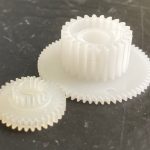
Gears, Chains and Belt Drives

Gears, chains, and belt drives are mechanical systems used to transmit rotation and torque between shafts. Each establishes a relationship between a driving element and a driven element, typically defining a speed ratio and, in some cases, a change in direction. The distinction among them lies in how motion is transferred and how strictly that motion is constrained.

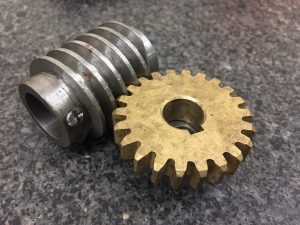
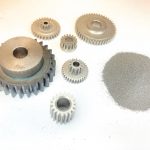
Gears transmit motion through direct contact between mating teeth. The geometry of the tooth profiles establishes a fixed relationship between rotational speeds, and, under normal operation, there is no slip. This results in a consistent and repeatable ratio between input and output.

Chain drives use a flexible chain that engages with toothed sprockets. Motion is transferred through this engagement, producing a defined ratio based on sprocket size. The chain allows separation between shafts and introduces flexibility in layout, while maintaining a positive drive.

Belt drives transmit motion between pulleys using either friction or tooth engagement. Friction-based belts allow relative motion under load, while timing belts use teeth to maintain a fixed relationship between shafts. In both cases, the belt provides a flexible connection that can span distance and accommodate minor misalignment.

These systems differ primarily in how they manage the relationship between shafts. Gears impose a direct and fixed interaction. Chains maintain a defined relationship through a flexible intermediate element. Belts allow either a frictional or toothed connection, depending on the design. Each represents a different method of transmitting motion while constraining the behavior of rotating components.
Harmonic Drive

Harmonic Drive
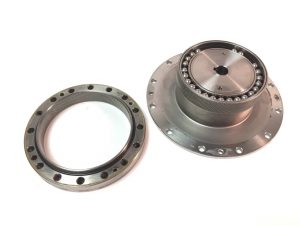
Harmonic drives are a type of gearing system that use a flexible outer wheel with internal teeth, and a rigid inner wheel with external teeth, separated by a series of ball bearings. The unique design of the harmonic drive allows for high gear ratios, high torque-to-weight ratios, and precise positioning with low backlash. The compact...

Gear Manufacturing

Gear Manufacturing
Gear manufacturing is the process of creating gears, which are important components in many machines and mechanisms. There are several methods used in gear manufacturing, including hobbing, shaping, skiving, milling, broaching, and grinding. Each method has its own advantages and disadvantages, and the choice of method depends on the type of gear, its size, material,...

Gear Types

Gear Types
Spur Gears Spur gears are the most common type of gear and are used in a wide range of applications. They have straight teeth that are parallel to the axis of rotation and transmit power between parallel shafts. Spur gears are often used in applications where noise and accuracy are not critical factors. Helical Gears...

Gear Design & Specification

Gears are mechanical components that transmit power and motion between rotating shafts. They are found in a wide range of machines, from simple hand-cranked devices to complex industrial equipment. The design of gears is critical to the performance and reliability of these machines. Gear design involves the selection of appropriate gear types, sizes, and materials...
Harmonic Drive

Harmonic Drive

Harmonic drives are a type of gearing system that use a flexible outer wheel with internal teeth, and...
Gear Manufacturing

Gear Manufacturing

Gear manufacturing is the process of creating gears, which are important components in many machines...
Gear Shaping

Gear Shaping

Shaping is a subtractive process where the gear is cut into a blank or a partially formed gear using...
Powder Metal Gear Manufacturing

Powder Metal Gear Manufacturing

Powder metallurgy (PM) is a popular manufacturing method for producing high-quality gears. PM is a process...
Gear Hobbing

Gear Hobbing

Gear hobbing is a machining process that involves cutting teeth into a gear blank using a specialized...
Machining Gears

Machining Gears

Machining gears is a common manufacturing process used to create gears for various applications, including...
Gear Skiving

Gear Skiving

One of the most popular methods of gear manufacturing is skiving. Skiving is a process of producing...
Gear Casting

Gear Casting

casting is often used to manufacture gear blanks. Gear blanks are essentially the rough shapes of gears...
Injection Molding of Gears

Injection Molding of Gears

Plastic gears are increasingly replacing metal gears due to their unique properties and developments...
AGMA - American Gear Manufacturers Association

AGMA - American Gear Manufacturers Association

The American Gear Manufacturers Association (AGMA) is a non-profit trade association based in Alexandria,...