
Air quenching is a heat-treatment process in which a heated metal part is cooled in air rather than being immersed in a liquid quench medium. Compared to water, brine, or oil quenching, air quenching produces a slower and generally more uniform cooling rate. Many modern alloy and tool steels are specifically designed to harden under these slower cooling conditions.
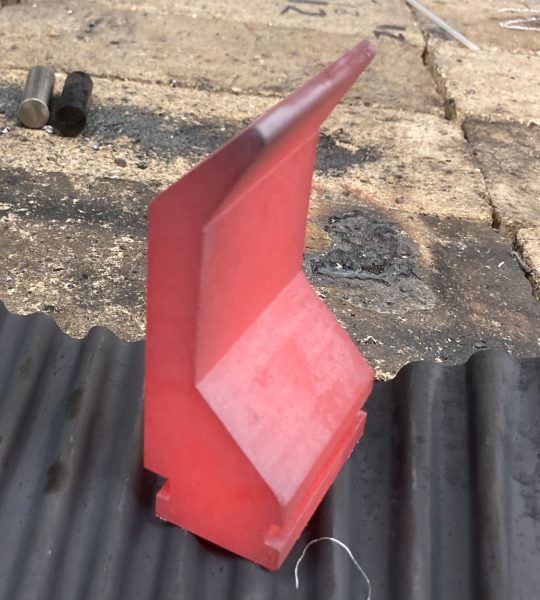
In air quenching, the workpiece is heated to its austenitizing temperature and then removed from the furnace and exposed to air for cooling. Depending on the application, the part may cool in still air, forced air, or under controlled atmospheric conditions. Some industrial systems use fans or high-velocity gas circulation to increase cooling consistency and rate.
Air-hardening steels contain alloying elements that increase hardenability, allowing martensite to form even at relatively slow cooling rates. Common examples include many tool steels in the A-series, such as A2 Tool Steel. These steels are often selected for applications where dimensional stability and reduced distortion are important.
One advantage of air quenching is the reduction of thermal shock. Because the cooling rate is slower than liquid quenching, temperature gradients within the part are generally less severe. This helps reduce internal stresses, warping, and cracking. Air quenching is therefore commonly used for precision tools, dies, punches, molds, and other components that must maintain close dimensional tolerances.
Air quenching can also simplify heat-treatment equipment because no liquid quench tank is required. In some cases, parts may simply be placed on a rack or refractory surface after heating and allowed to cool naturally. However, the cooling environment still matters. Uneven airflow or poor support during cooling can contribute to distortion.
The term “air quenching” can describe several related cooling methods. Still-air cooling relies on natural convection, while forced-air cooling uses fans or blowers to increase heat transfer. In vacuum furnaces, gas quenching with nitrogen, argon, or helium may serve a similar role and is often considered a more controlled form of air-type quenching.
One limitation of air quenching is that it is generally unsuitable for steels requiring very rapid cooling rates. Plain carbon steels with low hardenability may not fully harden when cooled only in air. Instead, they may form softer microstructures such as pearlite or bainite rather than martensite.
Surface oxidation and scale formation may also occur during air quenching if the process takes place in an oxygen-containing atmosphere. For this reason, controlled atmosphere furnaces, stainless foil wrapping, vacuum furnaces, or anti-scale compounds are often used with air-hardening steels to protect the surface during heat treatment.
Because air quenching reduces distortion and cracking compared to more aggressive quenching methods, it is widely used for high-alloy tool steels and precision heat-treated components. Its slower and more uniform cooling behavior makes it an important part of modern heat-treatment practice.